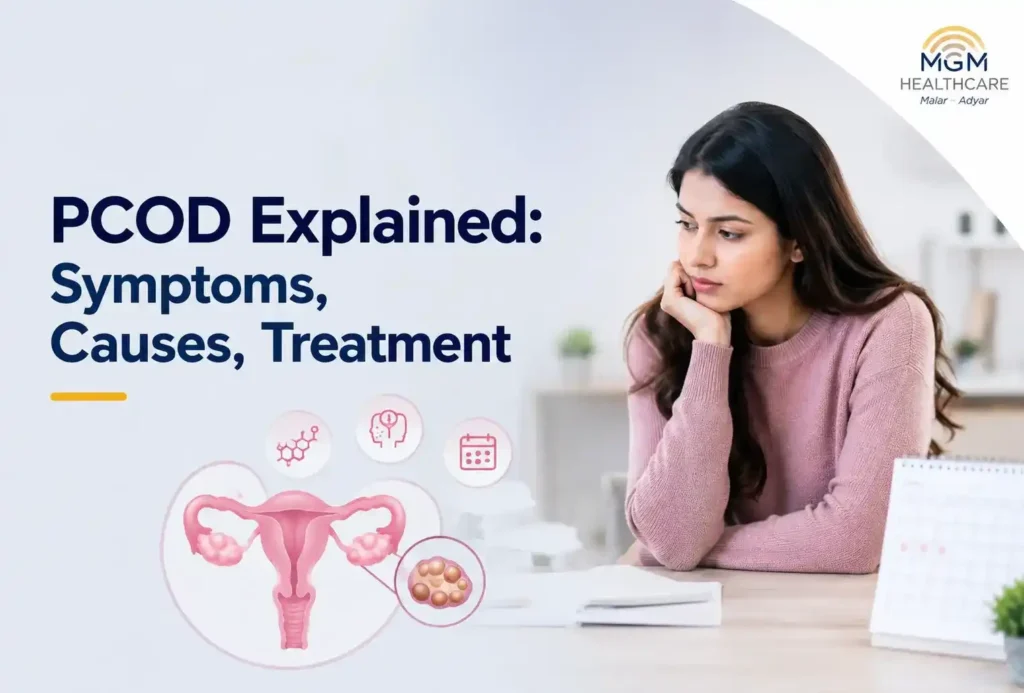
Getting a PCOS diagnosis can feel overwhelming, especially with so much conflicting information online. Understanding actual PCOS symptoms and treatment options — not the scary internet forums — makes managing it far less intimidating than it first feels.
What Exactly Is PCOS?
PCOS, or Polycystic Ovary Syndrome, is a hormonal condition affecting how the ovaries function — it’s estimated to affect roughly 1 in 5 women in India, though many remain undiagnosed for years.
That number surprised a lot of my friends when I mentioned it — PCOS is genuinely common, not rare.
Common PCOS Symptoms
- Irregular or missed periods
- Excess facial or body hair (hirsutism)
- Persistent acne, especially along jawline
- Weight gain, particularly around the abdomen
- Thinning hair on the scalp
- Difficulty losing weight despite effort
- Fertility challenges
Why PCOS Symptoms Vary So Much
No two women experience PCOS identically — some have severe irregular cycles with minimal other symptoms, while others deal with significant acne and hair growth with fairly regular periods.
1. Getting Diagnosed Properly
Diagnosis typically involves blood tests (hormone levels), an ultrasound, and ruling out other conditions with similar symptoms — thyroid issues can mimic PCOS symptoms closely.
2. Lifestyle-Based Treatment Approaches
For many women, the first line of PCOS symptoms and treatment involves lifestyle changes — even a 5-10% reduction in body weight can significantly improve hormonal balance and cycle regularity.
This isn’t about extreme dieting — moderate, sustainable changes genuinely move the needle for a lot of women.
3. Diet Adjustments That Help
- Reducing refined sugar and processed carbs
- Increasing fiber and protein intake
- Anti-inflammatory foods (leafy greens, nuts, fatty fish)
- Limiting dairy if it worsens symptoms (varies by individual)
4. Exercise and PCOS
Both strength training and cardio help improve insulin sensitivity, which is central to managing PCOS symptoms for most women, regardless of weight goals.
5. Medical Treatment Options
- Birth control pills (regulate cycles, reduce acne/hair growth)
- Metformin (improves insulin resistance)
- Anti-androgen medications (for excess hair/acne)
- Fertility medications (if trying to conceive)
6. Managing PCOS and Fertility Concerns
PCOS is one of the most common causes of fertility challenges, but it’s also very treatable — many women with PCOS conceive successfully with the right medical support.
7. Mental Health and PCOS
PCOS symptoms and treatment discussions often overlook the emotional toll — anxiety and mood changes are notably more common in women with PCOS, partly due to hormonal fluctuations themselves.
Nobody really talks about this part enough — the frustration of unpredictable symptoms takes a real emotional toll that deserves acknowledgment.
Is PCOS Curable?
No, but it’s manageable. Most women with consistent lifestyle and medical management live full, healthy lives with well-controlled symptoms.
FAQs
Q: Can PCOS symptoms improve without medication? Yes, many women see significant improvement through diet, exercise, and weight management alone, though some still need medical support.
Q: Does PCOS mean I can’t get pregnant? No, PCOS makes conception more challenging for some women, but it doesn’t mean infertility — many treatment options exist.
Q: What foods should I avoid with PCOS? Refined sugar, processed carbs, and excessive dairy are commonly recommended to limit, though individual triggers vary.
Q: Is PCOS the same as ovarian cysts? Not exactly — PCOS involves hormonal imbalance, and while ovaries may show multiple small follicles, it’s a broader metabolic condition, not just cysts.
Q: At what age does PCOS typically get diagnosed? Most commonly diagnosed in the late teens to late 20s, though it can be identified at any reproductive age.
Conclusion
Understanding real PCOS symptoms and treatment options replaces fear with a genuine plan — lifestyle changes, medical support, and patience go a long way. If you suspect PCOS, don’t self-diagnose from symptoms alone; a proper workup with a gynecologist is the right next step.