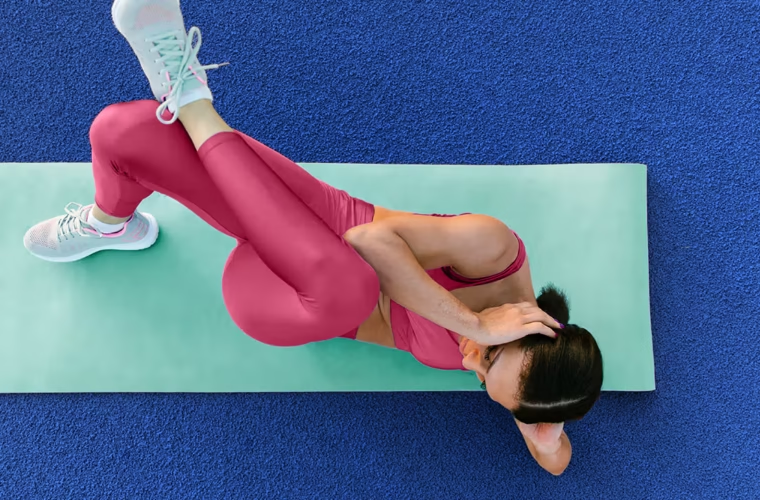
Gyms can feel intimidating when you’re just starting out — the equipment, the mirrors, people who seem to know exactly what they’re doing. Strength training at home removes that pressure entirely, and honestly, it works just as well for beginners.
Can You Actually Build Strength Without a Gym?
Strength training at home is absolutely effective for beginners — bodyweight and resistance band exercises can build meaningful muscle and strength for the first 6-12 months of consistent training.
You don’t need a barbell to get stronger. You need progressive overload, which just means gradually making exercises harder over time.
1. Start With Bodyweight Basics
Master these movement patterns first:
- Squats (leg strength)
- Push-ups (chest, shoulders, triceps)
- Rows using a towel or resistance band (back)
- Planks (core stability)
- Lunges (single-leg strength and balance)
2. Add Resistance Bands Early
Resistance bands are cheap, portable, and genuinely effective. They add tension to nearly every exercise and let you keep progressing once bodyweight alone stops being challenging.
3. Understand Progressive Overload
This is the actual secret to getting stronger — gradually increasing difficulty, whether through more reps, slower movements, or added resistance.
Ways to progress without weights:
- Slow down the movement (4-second lowering phase)
- Add pauses at the hardest point
- Increase reps or sets
- Reduce rest time between sets
4. Sample Beginner Weekly Plan
- Monday: Lower body (squats, lunges, glute bridges)
- Wednesday: Upper body (push-ups, rows, shoulder taps)
- Friday: Full body circuit
- Weekend: Light stretching or rest
5. Nutrition Matters Just as Much
Strength training at home won’t show results without adequate protein intake — aim for roughly 1.2-1.6 grams of protein per kg of body weight if muscle growth is your main goal.
Dal, paneer, eggs, curd, and chicken all work well for Indian diets without needing fancy supplements.
6. Don’t Skip Recovery Days
Muscles grow during rest, not during the workout itself. Training the same muscle group every single day without rest actually slows progress down.
7. When to Consider Adding Weights
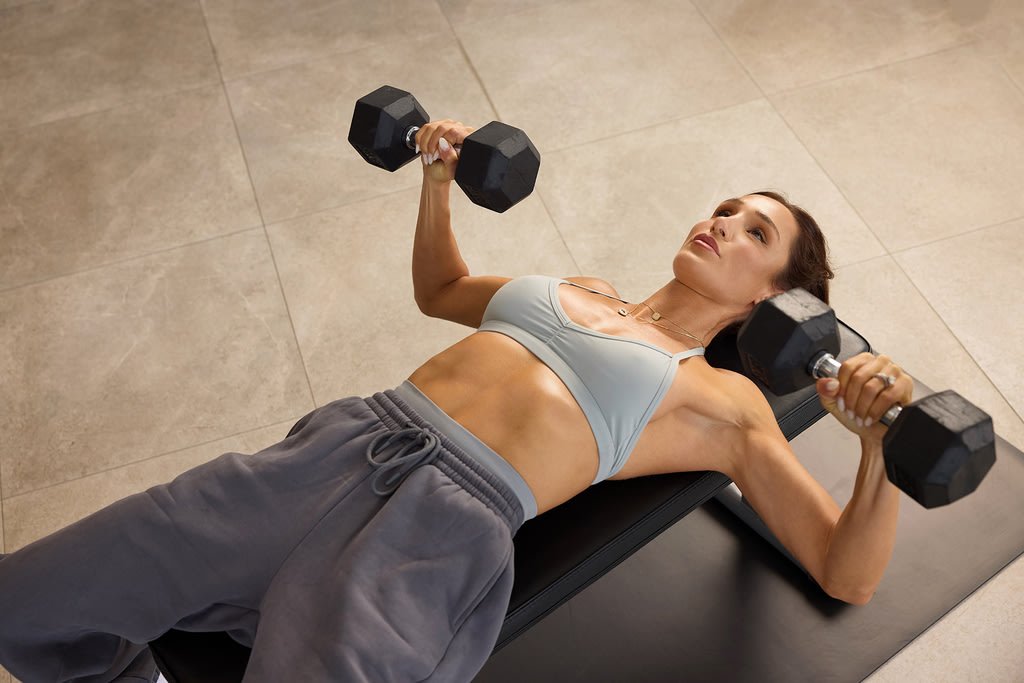
Once bodyweight exercises start feeling genuinely easy — usually after 2-3 months — dumbbells or a simple home gym setup can keep progress going.
Common Beginner Mistakes
- Skipping warm-ups
- Poor form to lift “heavier” (or do more reps)
- Comparing progress to gym-goers using equipment
- Expecting dramatic changes in the first month
FAQs
Q: Is strength training at home as effective as gym training? For beginners, yes — the difference becomes more noticeable at advanced levels where heavier external weight is needed.
Q: How many days a week should beginners strength train? 3 days a week with rest days in between is ideal for building a sustainable habit.
Q: Do I need protein supplements for strength training at home? Not necessarily — whole food sources can meet most people’s protein needs.
Q: Can strength training at home help with weight loss? Yes, building muscle increases resting metabolism, which supports fat loss over time.
Q: What’s the best time of day to train? Whatever time you’ll actually stick to consistently — morning works for some, evening for others.
Conclusion
Strength training at home is a completely legitimate way to build real strength, especially when you’re just getting started. Focus on consistency and gradual progression over the next 8 weeks rather than chasing quick results, and you’ll be surprised how far bodyweight training can take you.